

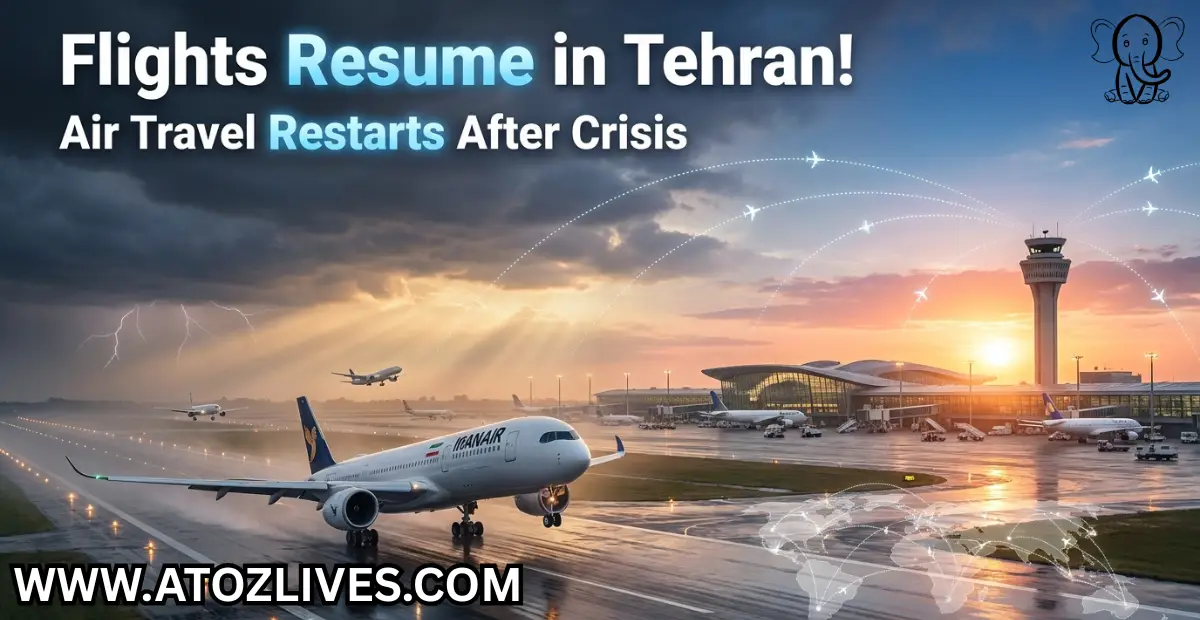
Air Travel Resumes as Situation Shows Signs of Stabilising
Iran has resumed commercial flight operations from its main international airport in Tehran, marking a significant step toward normalcy after weeks of disruption caused by the ongoing conflict in the region.
The move comes as a fragile ceasefire continues to hold, allowing authorities to gradually reopen airspace and restore connectivity.
Flights from Imam Khomeini International Airport began operating for the first time in nearly two months, with initial routes connecting to cities such as Istanbul, Muscat and Medina.
Officials confirmed that multiple flights had already taken off, signaling a phased revival of international travel.
The resumption follows a partial reopening of Iran’s airspace earlier this month which had remained largely shut due to safety concerns during the conflict.
Aviation authorities indicated that operations would expand gradually depending on security conditions and coordination with international airlines.
Gradual Recovery Expected Amid Ongoing Uncertainty
The reopening of flights is being seen as an important milestone for both travelers and the aviation sector which had been severely affected by the prolonged suspension.
Thousands of passengers were left stranded during the shutdown, and airlines were forced to cancel or reroute flights across the region.
Officials have stated that additional destinations may be added in the coming days as the situation improves. Domestic flights had already resumed earlier, helping restore some level of internal connectivity.
However, full scale international operations are expected to take time as global airlines assess safety and operational risks.
Despite the positive development, uncertainty remains. The broader geopolitical situation continues to influence travel and trade and any escalation could once again disrupt flight operations.
Aviation experts note that while the restart of services is encouraging, sustained stability will be crucial for long term recovery.
The return of commercial flights reflects cautious optimism, as authorities attempt to balance safety concerns with the need to revive economic and travel activity.
For now, the focus remains on ensuring smooth operations while closely monitoring developments in the region.