

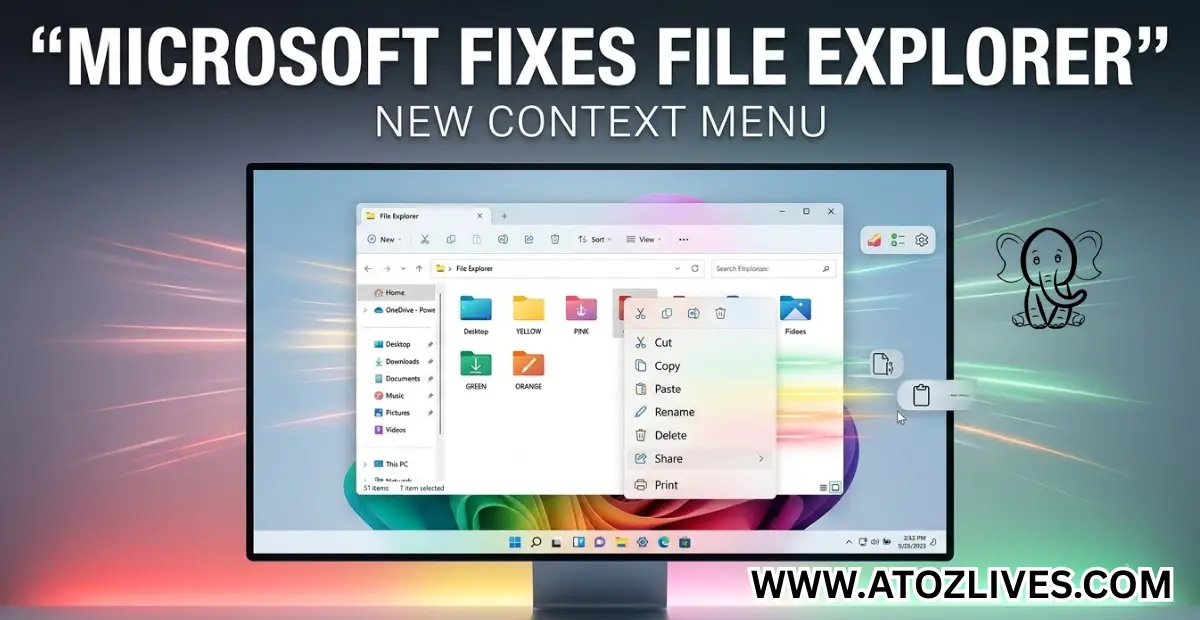
microsoft is making significant changes to File Explorer and Windows’ right-click Context Menu as part of a broader effort to improve performance, simplify the user experience and give people more control over how Windows works.
The company has acknowledged that Windows has faced growing criticism over quality and usability. Microsoft says it has been paying closer attention to the problems users encounter in everyday tasks, particularly with File Explorer, one of the most frequently used components of the operating system.
According to Microsoft, small problems can have a major impact on how users perceive Windows. A freeze while renaming a file, a slow response after right-clicking, or a Home page that repeatedly reloads can be enough to make the entire experience feel unreliable.
Over recent months, Microsoft says it has been working on File Explorer to address unexplained freezes, sluggish behavior and workflow interruptions. The company is also focusing on making the application feel more responsive and consistent.
The Context Menu is receiving an especially noticeable overhaul. Microsoft is testing new customization options through the Experimental Windows Insider Channel. Users will be able to decide which commands appear directly in the menu and which ones can be removed.
Common actions such as Cut, Copy, Paste, Rename, Delete and Share can be placed inline, providing a more familiar experience for people accustomed to older versions of Windows. Users can also add commands such as Print or disable options they rarely use, including Send to and Create shortcut.
The changes could be particularly useful for Windows 10 users who have struggled to adapt to the redesigned Windows 11 Context Menu. Microsoft says it is adding options that can bring back some of the familiar Windows 10-style behavior.
The latest changes suggest that Microsoft is increasingly focused on giving users flexibility rather than forcing everyone to follow a single interface design. If testing goes well, the improvements could eventually reach a wider Windows 11 audience.
For Microsoft, the message is clear: sometimes improving Windows may mean bringing back features and behavior that users already preferred.