

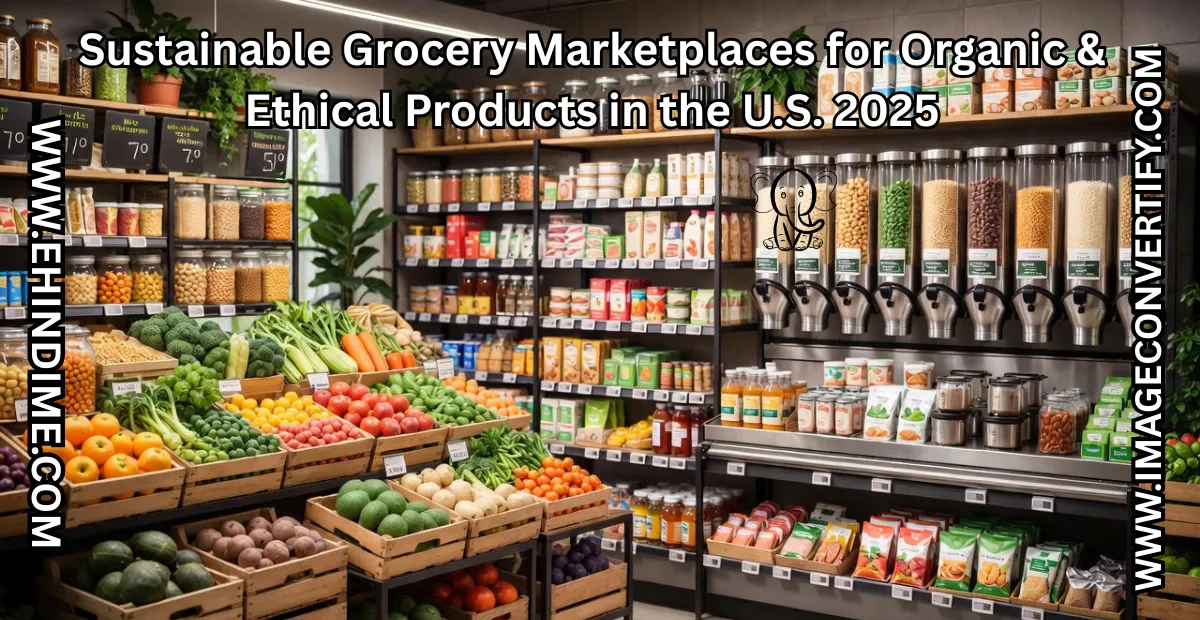
In this post we will learn about Sustainable Grocery Marketplaces for Organic & Ethical Products in the U.S. 2025.
The American grocery landscape has changed dramatically in recent years. With rising awareness of food sourcing, environmental responsibility and healthier lifestyles, consumers are increasingly leaning toward organic, ethical and sustainable choices.
In 2025, this shift has pushed sustainable grocery marketplaces into the mainstream, becoming trusted alternatives to conventional supermarkets.
These marketplaces are more than just online stores they are part of a growing movement that prioritizes clean ingredients, transparent farming practices, regenerative agriculture, low-waste packaging and fair treatment of farmers and producers.
They play an essential role in connecting conscious consumers with brands that value sustainability just as much as quality.
As shoppers move away from mass produced and heavily processed goods, sustainable grocery platforms are leading a quiet revolution.
This article explores how these marketplaces work, what makes them different and why they are reshaping the food ecosystem in the United States in 2025.
The Growing Demand for Ethical and Organic Grocery Options
The rise of sustainable grocery marketplaces is rooted in a major consumer shift people want to know what they are putting into their bodies and how their choices impact the planet.
Many customers prefer organic options not just for health but for environmental sustainability. Ethical grocery brands emphasize clean supply chains, humane treatment of workers and minimal ecological footprint.
Conventional grocery chains often struggle to meet these expectations due to their complex supply systems. Sustainable marketplaces, however are built on intentional sourcing, strict ingredient standards and close relationships with small regenerative farms and ethical producers.
With environmental concerns and health conscious decisions shaping modern consumer behavior. It is no surprise that sustainable grocery marketplaces have become essential destinations for those who want food that aligns with their values.
Are You Ready To Get Paid To Review Apps On Your Phone Then Try It…
What Makes a Marketplace ‘Sustainable’?
A sustainable grocery marketplace is defined by its commitment to transparency, reduced environmental impact and ethical standards.
These platforms curate their products carefully, prioritizing items that adhere to key principles such as:
• Certified organic or pesticide free ingredients
• Responsibly sourced and fair trade products
• Regenerative agriculture and soil friendly farming methods
• Low waste or compostable packaging
• Carbon-neutral or reduced emission shipping methods
• Support for small farmers, family businesses and ethical cooperatives
Their product lists are often accompanied by detailed sourcing notes, certifications and impact summaries that help consumers make informed decisions.
The Role of Regenerative Agriculture in 2025 Sustainable Grocery Movement
Regenerative agriculture has become a leading trend within organic grocery marketplaces. Unlike conventional practices that deplete soil nutrients, regenerative farming focuses on restoring soil health, biodiversity and natural ecosystems.
These methods help:
• Reduce carbon emissions
• Improve water retention
• Enhance crop nutrition
• Protect wildlife habitats
Sustainable grocery marketplaces often partner directly with regenerative farmers who prioritize healthy ecosystems over short term yields. Shoppers benefit from nutrient rich produce, chemical free foods and an understanding that their purchases actively support environmental restoration.
In this post we are learning about Sustainable Grocery Marketplaces for Organic & Ethical Products in the U.S. 2025.
How to Start a Blog in 2025: A Step-by-Step Guide for Beginners
Packaging Innovations: Minimizing Waste One Delivery at a Time
Packaging waste remains one of the largest problems in the food industry.
Sustainable grocery marketplaces in 2025 are tackling this through creative solutions designed to minimize environmental harm.
This includes:
• Compostable and plant-based packaging made from corn, bamboo or sugarcane
• Reusable jars and containers that can be returned and refilled
• Minimal packaging strategies for dry goods and pantry staples
• Plastic free shipping options with recyclable insulation and paper tape
These innovations are not only environmentally friendly but increasingly cost effective. By incorporating low waste packaging, sustainable marketplaces are setting new industry standards and helping consumers reduce their household waste without sacrificing convenience.
Carbon Neutral Shipping and Greener Distribution Models
Shipping has traditionally been a major contributor to carbon emissions. In response, many sustainable grocery marketplaces are investing in greener logistics. Carbon neutral options have become the norm in 2025.
Platforms achieve this by:
• Optimizing delivery routes
• Partnering with eco-friendly couriers
• Using electric vehicle fleets where possible
• Offsetting emissions through verified climate projects
Customers can enjoy doorstep delivery while supporting a supply chain that minimizes environmental impact. This approach demonstrates that convenience and sustainability can coexist without compromise.
In this post we are learning about Sustainable Grocery Marketplaces for Organic & Ethical Products in the U.S. 2025.
Empowering Ethical Producers and Small Farms
One of the strongest advantages of sustainable grocery marketplaces is their ability to empower small scale farmers, ethical cooperatives and independent producers.
Many of these growers and makers lack the scale or margins to compete in traditional retail. Sustainable marketplaces offer them a platform where their values rather than mass-production capability take center stage.
These platforms ensure fair compensation, highlight the stories behind each product and enable farmers to reach a national audience. This direct connection fosters trust and supports rural economies, biodiversity and long term food security.
Are You Excited To Read about AI Then Click Here…
A Better Shopping Experience for Conscious Consumers
The success of sustainable marketplaces comes from their ability to combine ethical values with modern shopping convenience. Users can browse by sustainability filters, ingredients, certifications or food philosophy whether vegan, gluten-free, organic only or zero waste.
Benefits include:
• Curated organic and clean label selections
• Consistent transparency in sourcing
• Access to emerging ethical brands
• Time saving subscriptions for pantry staples
• Exclusive deals for sustainable conscious households
The streamlined shopping experience makes it easier than ever to adopt an eco-friendly lifestyle, even for those new to organic and ethical foods.
The Future of Sustainable Grocery Marketplaces in the U.S.
The momentum behind sustainable marketplaces suggests a strong future ahead.
Predictions for the coming years include:
• Broader national availability of regenerative produce
• Increased adoption of reusable packaging systems
• Greater investment in carbon neutral cold chain logistics
• New partnerships with local urban farms
• Expansion into personal care, supplements and eco home products
As sustainability becomes a priority for both consumers and brands. These marketplaces will continue shaping the evolution of ethical grocery shopping.
Their influence goes beyond commerce they are driving a cultural shift toward mindful consumption, healthier households and a more resilient environment for future generations.
In this post we are learning about Sustainable Grocery Marketplaces for Organic & Ethical Products in the U.S. 2025.
Want To Get Online Cash…
FAQs
1. What is a sustainable grocery marketplace?
It is an online platform that sells organic, ethical and eco-friendly food products with a focus on transparency, minimal waste and responsible sourcing.
2. What makes these marketplaces different from traditional grocery stores?
They prioritize organic ingredients, regenerative farming, sustainable packaging and ethical labor practices over mass production.
3. Are the products on sustainable marketplaces more expensive?
Many products are competitively priced, especially when sourced from small farms and regenerative producers. Costs vary depending on quality and sustainability standards.
4. Do these marketplaces offer nationwide shipping?
Most major platforms ship across the U.S. and often use carbon neutral or low impact delivery systems.
5. How do they ensure ethical sourcing?
Through supplier vetting, certifications, transparent supply chain reporting and direct partnerships with farmers and artisans.
6. What types of products can I buy?
Organic produce, pantry items, dairy alternatives, plant based foods, ethically sourced meats, snacks, beverages and zero waste household essentials.
7. Are sustainable marketplaces suitable for families?
Yes They offer healthy, clean label foods ideal for households that want to avoid artificial ingredients and choose responsible brands.
8. How does regenerative farming affect the food quality?
Regenerative farming improves soil health and nutrient density, resulting in fresher, more flavorful produce.
9. What packaging do sustainable groceries use?
Reusable containers, compostable packaging, plastic free shipping materials and minimal waste systems.
10. Is carbon-neutral grocery delivery reliable?
Yes Advanced logistics and eco focused couriers have made sustainable delivery efficient and dependable.
we have learnt about Sustainable Grocery Marketplaces for Organic & Ethical Products in the U.S. 2025.
“Live Chat Jobs – You have to try this one”
Ready to Begin?
➜ Click Here to explore top-rated affiliate programs on ClickBank!
➜ Reach Our Free Offers: “Come Here To Earn Money By Your Mobile Easily in 2025.”
Want To Read More Then Click Here…
If You Are Interested In Health And Fitness Articles Then Click Here.
If You Are Interested In Indian Share Market Articles Then Click Here.
Thanks To Visit Our Website-We Will Wait For You Come Again Soon…