
The creator economy has changed significantly, and you no longer need a massive following to build a monetized content business. For beginners, the more useful question is often whether it is better to remain a nano creator or grow into the micro-influencer category.
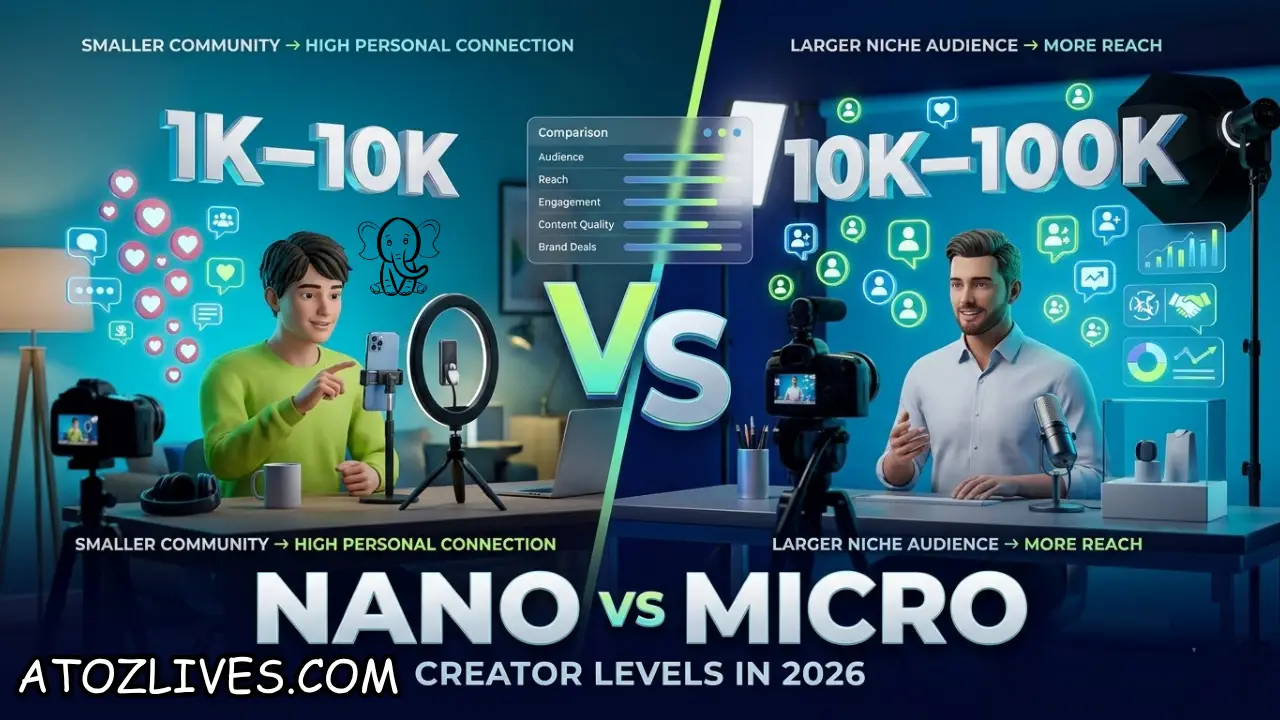
A nano influencer generally refers to a creator with roughly 1,000 to 10,000 followers, while micro-influencer definitions commonly extend from around 10,000 to 100,000 followers. These ranges are not universal industry rules, and different platforms, agencies, and brands use different classifications. Recent 2026 Indian creator-market guides use similar ranges.
The difference is not simply the number displayed on a profile. Audience size can affect reach, pricing, brand interest, and campaign opportunities, but engagement, niche relevance, audience location, content quality, and trust can be just as important.
A nano creator may have a smaller audience but stronger personal relationships with followers. A micro creator generally has greater reach and may have more predictable campaign opportunities. Neither level automatically guarantees better income.
For beginners, this distinction matters because growing from 1,000 to 10,000 followers can require a very different strategy from growing from 10,000 to 100,000. The monetization model should evolve alongside the audience rather than simply waiting for a particular follower milestone.
So, in the nano vs micro influencer debate, the more realistic question is not “Which one is better?” It is “Which level gives a beginner the best combination of trust, reach, monetization opportunities, and manageable workload?”
Are You Ready To Get Paid To Review Apps On Your Phone Then Try It…
Nano Influencers Have an Important Advantage: Trust and Niche Relevance
Nano creators can be surprisingly attractive to brands because their audiences are often highly focused. A creator who posts about a specific hobby, city, profession, lifestyle, or product category can develop a close relationship with followers.
That relationship can make recommendations feel more personal. If someone follows a creator because they consistently provide useful information about budget travel, home cooking, fitness equipment, beauty products, or local businesses, a relevant recommendation may receive more attention than a generic advertisement from a much larger account.
Recent 2026 creator-market data from Indian influencer networks places nano creators around the 1,000-to-10,000-follower range and reports higher typical engagement than micro creators. However, engagement-rate benchmarks vary considerably by platform, niche, audience quality, and measurement method, so these numbers should be treated as directional rather than guaranteed.
The biggest advantage for a beginner is accessibility. A nano creator does not necessarily need a large production team, professional management, or a complicated media kit. A focused content strategy can be enough to begin demonstrating value to potential customers and brands.
Nano creators can also monetize beyond sponsorships. Affiliate links, digital products, UGC services, consultations, memberships, and platform-based fan support can all become relevant depending on the creator’s niche and platform.
This means a nano creator does not have to wait until becoming a micro influencer before attempting monetization. In fact, starting early can help the creator discover which products, services, and content formats actually generate commercial interest.

Micro Influencers Usually Have More Reach and More Commercial Opportunities
Micro influencers have an obvious advantage: scale. When an account reaches tens of thousands of relevant followers, a single piece of content can potentially expose a brand to a much larger audience than a nano creator can provide.
That additional reach can make micro influencers attractive for product launches, awareness campaigns, new-market campaigns, and promotions where brands need more impressions from fewer creator partnerships.
Some 2026 Indian influencer-market sources place micro creators between approximately 10,000 and 100,000 followers and report that brands increasingly use this segment because it can combine meaningful engagement with larger reach.
Micro creators may also have more negotiating power. A creator with a proven audience, consistent content performance, and a strong niche can potentially charge more than a beginner nano creator. But follower count alone does not determine a creator’s commercial value.
Brands may examine average views, engagement, audience demographics, geography, content quality, previous campaign performance, conversion data, and whether the creator’s audience actually matches the product.
There is also a practical trade-off. Growing into the micro category generally requires more content, more audience management, stronger consistency, and potentially more professional operations. The creator may need a media kit, rate card, business email, contracts, analytics, invoicing, and clearer campaign processes.
For someone who enjoys building an audience at scale, micro-influencer status can provide greater monetization potential. But for a beginner who values flexibility and close audience relationships, becoming micro should be treated as a growth stage rather than an automatic destination.
How to Start a Blog in 2025: A Step-by-Step Guide for Beginners
Nano vs Micro Influencer Monetization Depends on the Revenue Model
The easiest creator level to monetize depends heavily on what you are trying to sell. There is no single answer that applies to every business model.
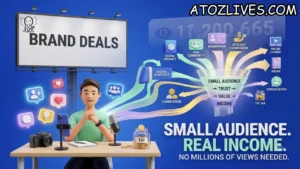
For brand deals, micro creators can have an advantage because brands often want a combination of reach and audience relevance. A micro creator may also have enough campaign experience and analytics to make negotiations easier.
For affiliate marketing, however, follower count may be less important. A nano creator with a highly targeted audience can generate meaningful sales if followers trust their recommendations and the products fit the audience’s needs.
Digital products can favor either category. A nano creator with specialized knowledge could sell templates, guides, ebooks, courses, or other digital resources to a small but highly relevant audience. A micro creator can potentially sell to a larger customer base but also has to maintain a broader audience relationship.
UGC is another important exception. A creator does not necessarily need a huge following to create user-generated content for brands. The brand may be paying for the creator’s ability to produce authentic-looking videos, demonstrations, testimonials, or product-focused content rather than paying primarily for access to the creator’s audience.
This is particularly useful for beginners because it separates “creator income” from “influencer income.” You can make money creating content for businesses even before you have a large audience of your own.
YouTube provides another example. Eligible creators can earn through multiple monetization features, while full advertising-revenue eligibility currently requires 1,000 subscribers plus either 4,000 valid public watch hours in the previous 12 months or 10 million valid public Shorts views in 90 days.
The practical lesson is simple: choose the monetization method before obsessing over the follower category. A nano creator selling a high-value service may earn more than a micro creator relying entirely on low-value sponsorships.
How Nano and Micro Creators Should Approach Brand Deals in 2026
Brand deals remain an important income source, but creators should not build their entire business around waiting for brands to discover them.
Nano creators can proactively approach smaller and highly relevant brands. Instead of sending a generic message saying “I have 5,000 followers and would love to collaborate,” a better pitch explains why the creator’s audience matches the company’s customer.
A strong pitch can include recent content examples, average views, audience demographics, engagement information, content formats, and a specific campaign idea. The objective is to demonstrate value rather than simply advertise follower count.
Micro creators can take a more data-driven approach. Brands may expect clearer campaign reporting, professional communication, deliverables, timelines, usage rights, and pricing. As campaign values increase, creators should pay greater attention to contracts and exactly how the brand can use their content.
Creators should also distinguish between payment for posting and payment for content usage. A brand may want to publish the creator’s video on its own social accounts, website, advertisements, or other channels. Those rights can have commercial value separate from the creator’s posting fee.
Transparency is essential at both levels. The FTC says influencers must clearly disclose material connections with brands, including financial relationships and situations where products or services are provided for free or at a discount.
The disclosure should be easy to notice and understand. The FTC advises against relying solely on a platform’s disclosure tool and says creators should make disclosures clear and conspicuous themselves.
For both nano and micro creators, credibility is a long-term asset. Accepting every available sponsorship can produce short-term revenue but damage audience trust if the promotions become irrelevant or misleading.
Are You Excited To Read about AI Then Click Here…
The Best Monetization Strategy Is Usually a Combination of Several Income Sources
Relying on a single income source is risky for creators. Algorithm changes, platform policies, advertising rates, seasonal demand, and brand budgets can all affect revenue.
A nano creator might start with affiliate marketing and UGC. Once the creator understands the audience’s needs, a digital product or service can be introduced. This creates a path from audience attention to direct revenue.
A micro creator can build a similar system at greater scale. Sponsorships may provide campaign income, affiliate marketing can generate commissions between campaigns, and digital products or memberships can create revenue that does not depend entirely on brand budgets.
YouTube’s current monetization system illustrates the broader trend toward multiple creator revenue streams. Depending on eligibility, creators can use advertising, memberships, Supers, Shopping, and other features rather than depending on advertising alone.
The important point is not to activate every monetization option immediately. Too many commercial messages can make a small account feel like a storefront rather than a useful creator community.
A better approach is to build a simple funnel. Free content attracts the audience, valuable recommendations build trust, an affiliate offer or service creates the first transaction, and a more valuable product or membership can serve people who want deeper help.
This approach also makes follower count less important. If a creator understands exactly what the audience needs, even a relatively small community can support a sustainable business.
The creator’s goal should therefore be to increase revenue per relevant follower, not simply to maximize follower count. Ten thousand followers who actively trust and respond to your content can be more commercially useful than a much larger audience with weak interest.
Nano vs Micro Influencer: Which Creator Level Is Easier to Monetize in 2026?
For most beginners, the nano level is easier to enter and can be easier to monetize through direct relationships, affiliate marketing, UGC, services, and highly targeted products. You do not need to wait until reaching 10,000 followers to start testing whether your audience has commercial value.
Micro creators generally have greater earning potential because they can offer more reach while still maintaining a defined niche. They may have access to larger brand campaigns and can potentially negotiate stronger rates when their analytics demonstrate consistent performance.
That does not mean every micro influencer earns more than every nano creator. A micro account with poor engagement and an unfocused audience may be less valuable than a nano creator with a highly specific and responsive community.
The best path for a beginner is therefore to monetize the audience you have while continuing to grow. If you have 2,000 followers, do not wait for 20,000 before learning affiliate marketing, UGC, digital products, or service sales.
As you grow, gradually professionalize the business. Track audience demographics, average views, engagement, clicks, conversions, revenue, and the types of content that produce the strongest results.
If you eventually reach the micro level, you will have something more valuable than a larger follower count: actual evidence of what your audience responds to and what businesses are willing to pay for.
So, nano vs micro influencer is not really a choice between a “small creator” and a “successful creator.” Nano is often the starting point where trust and specialization can be developed. Micro is a growth stage where greater reach can unlock larger commercial opportunities.
For a beginner in 2026, the smartest strategy is to build like a nano creator and think like a business owner. Focus on a specific audience, create useful content, test monetization early, protect your credibility, and grow only after you understand what is working.
Want To Get Online Cash…
FAQs
1. What is a nano influencer?
A nano influencer is commonly defined as a creator with roughly 1,000 to 10,000 followers. Definitions vary by platform and marketing company, so follower ranges should be treated as industry conventions rather than official categories.
2. What is a micro influencer?
A micro influencer commonly has around 10,000 to 100,000 followers, although definitions vary. Micro creators generally offer brands greater reach while maintaining a relatively focused audience.
3. Is it easier for nano influencers to get brand deals?
Nano creators can be attractive to niche and local brands because of their focused audiences, but they generally have fewer opportunities than established micro creators. Relevance and engagement can matter more than follower count alone.
4. Do nano influencers make money?
Yes. Nano creators can earn through UGC, affiliate marketing, digital products, services, memberships, fan support, and brand collaborations. The available options depend on the platform and audience.
5. Do micro influencers make more money than nano influencers?
Not automatically. Micro influencers usually have greater reach and may access larger campaigns, but income depends on niche, engagement, audience quality, monetization method, pricing, and conversion performance.
6. How many followers do I need before contacting brands?
There is no universal minimum. If you have a clearly defined niche and consistently produce quality content, you can approach relevant brands before reaching traditional micro-influencer numbers.
7. Can a nano influencer make money through affiliate marketing?
Yes. Affiliate marketing can work with a small audience when the audience has strong interest in the recommended products and trusts the creator’s recommendations.
8. Is UGC better than influencer marketing for beginners?
UGC can be easier to start because brands may pay for the content itself rather than the creator’s audience size. This means someone can potentially earn from UGC before building a large following.
9. Do influencers have to disclose paid partnerships?
In the United States, influencers generally need to clearly disclose material connections with brands when making endorsements. The FTC says financial relationships and free or discounted products can qualify as material connections.
10. Should a beginner focus on becoming a nano or micro influencer?
A beginner should focus first on building a valuable niche audience and learning how to monetize it responsibly. Reaching the micro category can become a natural growth goal, but monetization does not need to wait until then.
“Live Chat Jobs – You have to try this one”
Ready to Begin?
➜ Click Here to explore top-rated affiliate programs on ClickBank!
➜ Reach Our Free Offers: “Come Here To Earn Money By Your Mobile Easily in 2025.”
Want To Read More Then Click Here…
If You Are Interested In Health And Fitness Articles Then Click Here.
If You Are Interested In Indian Share Market Articles Then Click Here.
Thanks To Visit Our Website-We Will Wait For You Come Again Soon…