
In the tech hubs of San Francisco and Austin, a new phrase is haunting boardroom meetings: The Inference Wall.
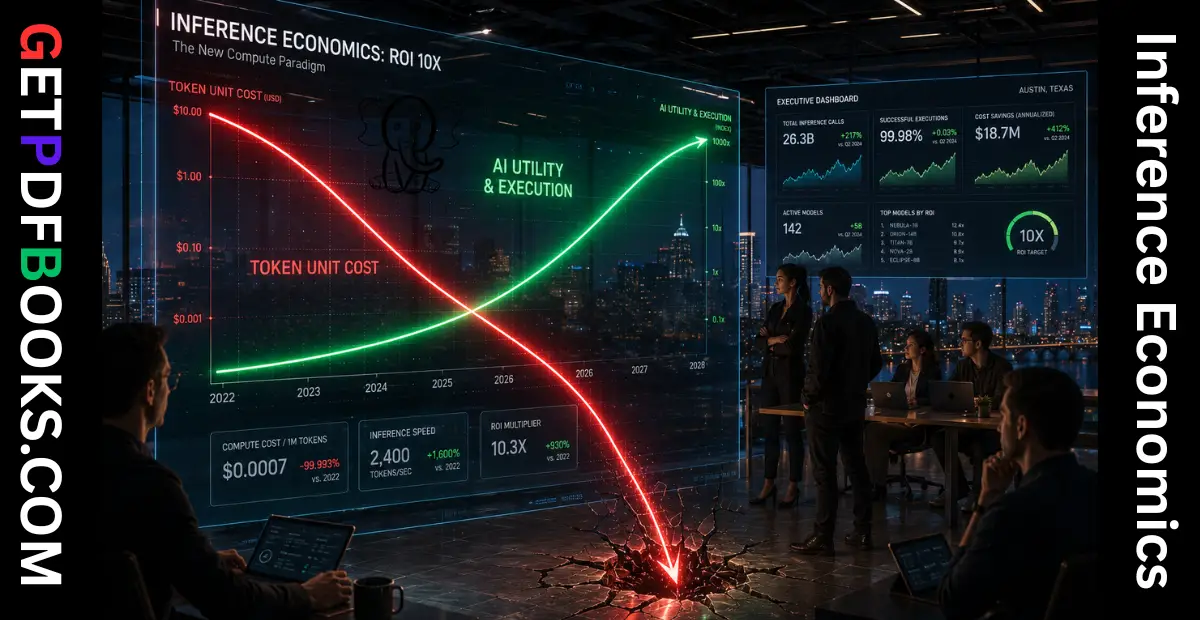
Between 2022 and 2024, the cost of processing one million tokens plummeted from roughly $12 to under $2.
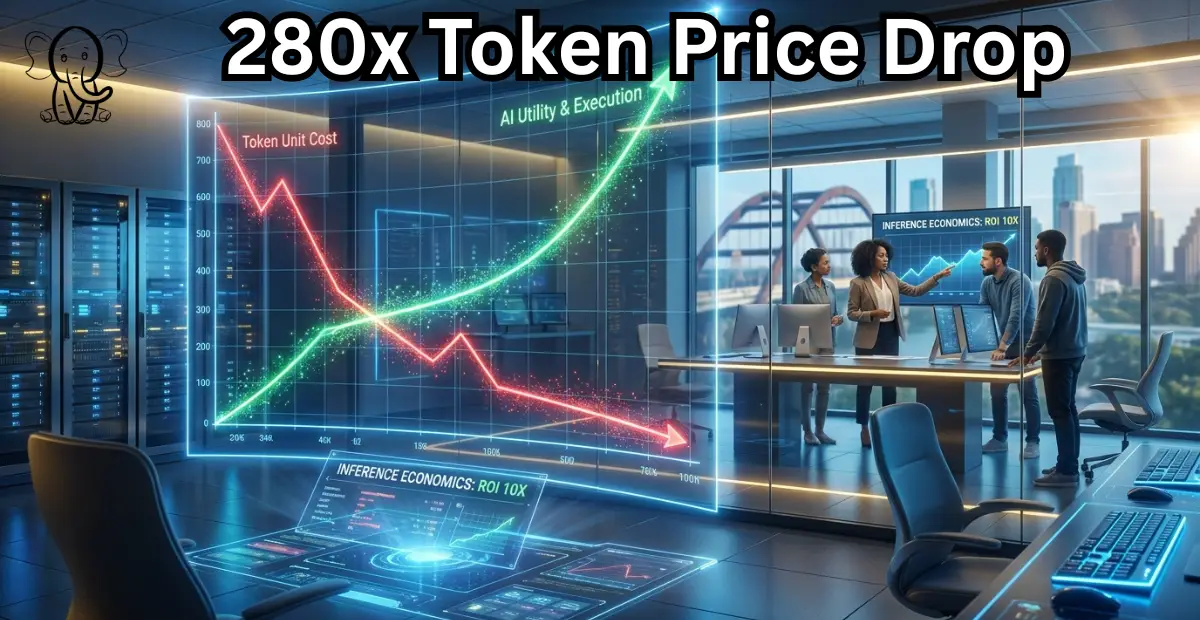
Stanford’s AI Index recently confirmed that achieving baseline reasoning is now 280 times cheaper than it was at the launch of ChatGPT.
But here is the catch: While tokens are cheaper, businesses are spending 108% more on AI year over year. Why? Because we have moved from “Chatting” to “Executing.”
If you want to scale your startup in 2026 without going bankrupt, you need to master Inference Economics.
1. The Paradox of Cheap Intelligence
Intelligence is now a commodity but agentic execution is a luxury.
-
Extraction (Wave 1): “Summarize this PDF.” (Cheap)
-
Reasoning (Wave 2): “Analyze these 500 reviews.” (Affordable)
-
Execution (Wave 3): “Build a marketing campaign, integrate it with my CRM and email the leads.” (Expensive)
Even though unit prices are down, Wave 3 workflows (Agentic AI) consume massive amounts of “Chain of Thought” tokens.
A single task that used to take 1,000 tokens now takes 30,000 because the AI is “thinking” and “looping” to ensure accuracy.
Are You Ready To Get Paid To Review Apps On Your Phone Then Try It…
2. The 3-Tier “Inference Economics” Strategy
Successful US startups in 2026 are using a tiered approach to manage their “Token Burn Rate”:
| Tier | Model Type | Use Case | Cost Profile |
| Tier 1: Edge | SLMs (Small Language Models) | Autocomplete, sorting, basic routing. | Near Zero (Processed on device) |
| Tier 2: Specialized | Open Source (Llama 4, Mistral) | Deep domain tasks (Legal, Medical, Code). | Fixed (Self hosted on private clouds) |
| Tier 3: Frontier | GPT-5, Claude 4 | High stakes strategy and creative breakthroughs. | Premium (Usage based API) |
How to Start a Blog in 2025: A Step-by-Step Guide for Beginners
3. Move to “Bring Your Own Key” (BYOK)
The “SaaS Premium” era is ending. Startups are no longer buying software that hides AI costs behind a flat monthly fee. Instead, they are using platforms that allow them to Bring Their Own Key (BYOK).
By connecting their own API keys (from Anthropic, Google or OpenAI) directly into tools, businesses are capturing the 280x price drop directly, rather than paying a 500% markup to a middleman software provider.
4. The Rise of “Inference-Optimized” Infrastructure
Startups are moving away from general purpose cloud compute.
To survive the “Inference Wall,” they are adopting:
-
Speculative Decoding: Using a small, fast model to guess the output of a large model, speeding up responses by 3x.
-
Smart Caching: Not paying for the same prompt twice. If an AI agent reads your 100-page manual once, the “context” is cached so the next 10 questions are nearly free.
-
Model Distillation: Taking the “knowledge” of a $15/million token model and teaching it to a $0.10/million token model.
Are You Excited To Read More about AI Then Click Here…
FAQs
1. What exactly is “Inference Economics”?
It is the study of the cost, latency and throughput of running a trained AI model in production. It focuses on the “marginal cost” of every answer an AI gives.
2. Why did prices drop 280x?
A combination of better hardware (NVIDIA Blackwell chips), more efficient model architectures (Mixture of Experts) and intense competition between Google, OpenAI and Meta.
3. Is open source cheaper than closed source APIs?
Usually, yes, for high volumes. If you process 100 million tokens a month, hosting your own “distilled” model on a private server is significantly cheaper than paying an API provider.
Want To Get Online Cash…
4. What is “Token Burn Rate”?
Similar to “Cash Burn,” it is the speed at which your AI applications consume API credits. In 2026, managing this is as important as managing payroll.
5. How do I prevent “Runaway Costs” with AI Agents?
Use “Circuit Breakers.” Set hard limits on how many loops an agent can perform before it must ask a human for permission to continue.
6. Does the 280x drop mean AI will eventually be free?
Unit costs will approach zero, but “Jevons Paradox” suggests that as things get cheaper, we find more ways to use them, so our total bills remain stable or grow.
7. Should I build my own AI chips?
Only if you are a “Unicorn” startup. Most US startups should focus on “Inference Orchestration” software that routes tasks to the cheapest possible model.
Are You Using Facebook, Twitter and YouTube (Get Paid To Use)
8. What is “Speculative Decoding”?
It’s a trick where a “junior” AI model predicts what the “senior” AI model will say. It makes the system 2-3 times faster and much cheaper to run.
9. How does “Context Caching” save money?
If you upload a massive 50MB database to an AI, context caching allows the AI to “remember” that data without re reading it and re charging you every time you ask a question.
10. What is the most “Rankable” topic in AI right now?
“Agentic ROI” and “Inference Benchmarking.” Everyone knows AI is cool; everyone wants to know how to make it profitable.
“Live Chat Jobs – You have to try this one”
Ready to Begin?
➜ Click Here to explore top-rated affiliate programs on ClickBank!
➜ Reach Our Free Offers: “Come Here To Earn Money By Your Mobile Easily in 2026.”
Want To Read More Then Click Here…
If You Are Interested In Health And Fitness Articles Then Click Here.
If You Are Interested In Indian Share Market Articles Then Click Here.
To convert images 100% free, you always use Image Converter Online .
Thanks To Visit Our Website-We Will Wait For You Come Again Soon…