
Google has officially stepped deeper into the AI-powered wearable race with the unveiling of its new Android XR smart glasses, a move that analysts believe could challenge Meta’s dominance in the rapidly growing AI glasses market.
The announcement came during the company’s Google I/O 2026 event, where the tech giant showcased its vision of blending artificial intelligence with everyday wearable devices.
The new smart glasses are powered by Google’s Android XR platform and integrated with the company’s Gemini AI assistant.
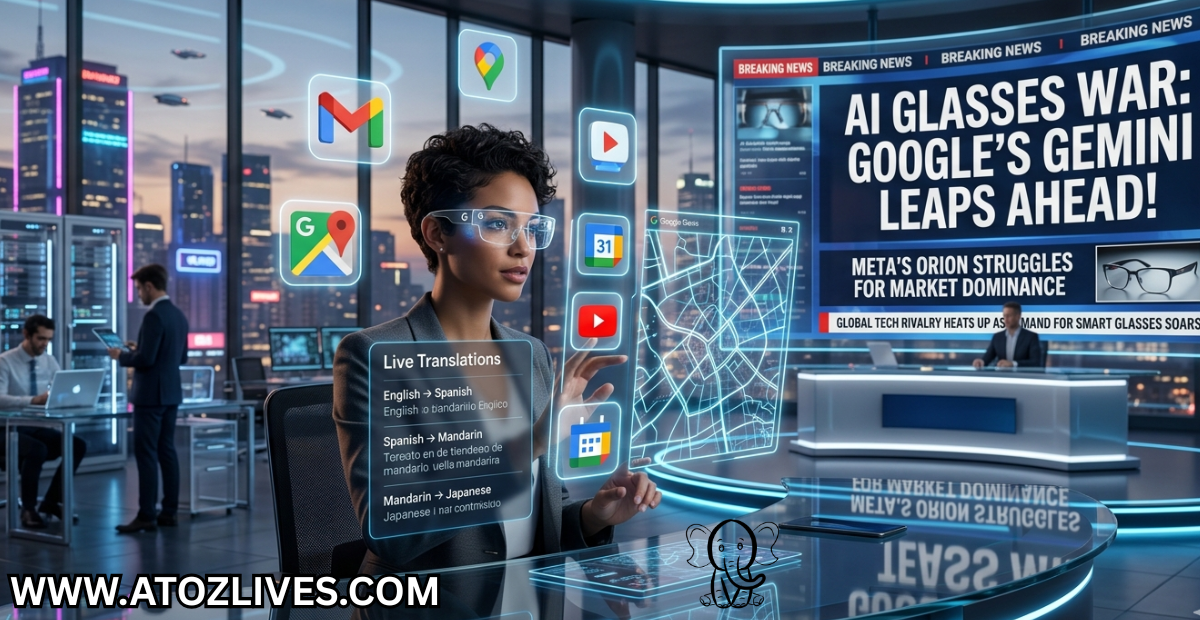
Unlike traditional smart glasses focused mainly on cameras and audio, Google aims to turn the device into a real-time digital companion capable of navigation, translation, reminders and hands-free assistance.
To strengthen its push, Google has partnered with major global brands including Samsung Electronics, fashion eyewear company Gentle Monster and optical retailer Warby Parker.
Samsung is expected to handle much of the hardware development, while the eyewear partners will focus on stylish frame designs and prescription lens support.
Industry experts believe Google’s biggest advantage lies in its ecosystem.
Services such as Gmail, Google Maps, YouTube, Calendar, Google Meet and Photos could allow the glasses to deliver deeper AI-powered experiences than competitors currently offer.
Analysts say this integration may help users manage schedules, receive contextual reminders and interact across multiple devices more naturally.
Research firm Counterpoint noted that Meta currently controls nearly 80% of the global AI glasses market through its Ray-Ban Meta lineup.
However, Google’s broad Android user base and support for both Android and iPhone devices could help the company rapidly expand its reach across global markets.
The competition is expected to intensify further as Apple is also rumored to be preparing its own AI-powered wearable products.
Meanwhile, Meta and its eyewear partner EssilorLuxottica are likely to increase marketing efforts ahead of Google’s commercial rollout.
Despite the excitement, analysts caution that it is still too early to predict the market impact because Google has not yet revealed pricing, battery details or final specifications.
Still, the launch signals that the next major technology battle may shift from smartphones to AI-powered smart glasses, where companies are racing to make artificial intelligence part of everyday life.