
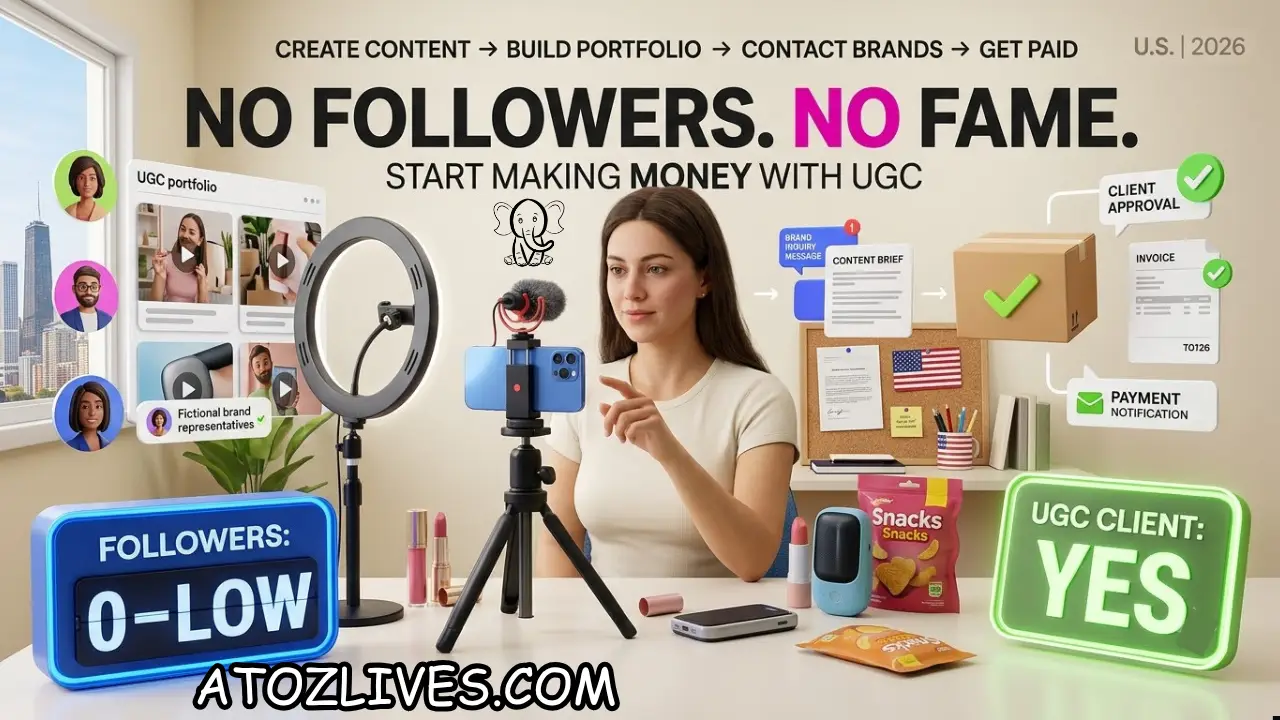
You do not need to be an influencer to make money from user-generated content. That is the part of UGC that many beginners misunderstand.
Traditional influencer marketing is largely built around access to an audience, while a UGC creator is primarily selling the ability to produce usable content for a brand.
That difference creates an opportunity for beginners in the United States who have no large social following.
A brand may want a natural-looking product demonstration, testimonial-style video, unboxing, tutorial, lifestyle clip, or short advertisement.
Instead of hiring a celebrity or established influencer, the company can work with a creator who can make the content itself.
The U.S. creator economy is becoming a substantial commercial market. Reuters reported in September 2026 that U.S. social-media influencer revenue is expected to reach about $21 billion in 2026.
While brands are increasingly paying attention to smaller creators and authenticity rather than relying only on huge audiences.
That does not mean every beginner will immediately make hundreds or thousands of dollars. UGC is still a competitive freelance business.
Your advantage comes from understanding what brands need, creating a useful portfolio, pitching professionally, negotiating usage rights, and consistently delivering good content.
Are You Ready To Get Paid To Review Apps On Your Phone Then Try It…
What UGC Actually Means and Why You Can Start Without Followers
UGC stands for user-generated content, but paid UGC work is slightly different from ordinary content that customers spontaneously post online.
In a paid UGC arrangement, a brand hires a creator to produce content that the company may use on its social accounts, website, product pages, email campaigns, or advertising channels.
The creator’s audience can be irrelevant because the deliverable is the content itself. A person with 200 Instagram followers can potentially create the same type of product video as someone with 50,000 followers.
The commercial value comes from the quality and usefulness of the asset, not automatically from the creator’s reach.
This is why UGC should be approached more like freelance production than traditional influencer marketing. You are creating a product for a customer.
That product might be a 20-second video, a product demonstration, a testimonial-style clip, several photographs, raw footage, or multiple versions of an advertisement.
The distinction is important when setting expectations. If a company wants you to publish the content to your own audience, your reach and engagement become relevant and the arrangement starts moving toward influencer marketing.
If the company simply wants you to create content for its own use, the main question is whether you can produce content that meets the brief.
There is also no guarantee that “looking authentic” means filming something careless. Good UGC still requires lighting, clear audio, appropriate framing, strong hooks, understandable messaging, clean editing, and a believable presentation.
The content should feel natural while still being useful to the brand.
How to Start a Blog in 2025: A Step-by-Step Guide for Beginners
How Beginners Can Build a UGC Portfolio Without Having Clients
The biggest problem for beginners is often the portfolio paradox: brands want to see your work before hiring you, but you need work to build a portfolio. You can solve this by creating sample or “spec” UGC using products you already own.
Choose three to five products from different categories you understand. They could be a coffee product, skincare item, kitchen product, app, clothing item, electronics accessory, fitness product, or household item.
You do not need permission to create a private sample for your portfolio, but you should clearly present it as sample work rather than implying that the company hired you.
Create different formats rather than making five nearly identical videos. One could be an unboxing, another could demonstrate how the product works, another could follow a problem-and-solution structure, and another could be a casual testimonial-style concept. This shows potential clients that you can adapt your storytelling.
Your first portfolio does not need an expensive website. A clean, mobile-friendly portfolio page or organized folder can be enough if the work is easy to view.
Include your name, niche, short introduction, sample videos, services, contact information, and any relevant production details. Make it possible for a brand manager to understand your offer within a minute.
The quality of the samples matters more than the quantity. Three excellent examples can communicate more than twenty weak videos. Brands want evidence that you understand their audience and can make content that fits an advertising environment.
Do not wait until you have expensive equipment. A modern smartphone, reasonable lighting, a quiet location, and clear audio can be enough to create your first samples.
Your early investment should be focused on improving production quality rather than buying equipment simply because other creators have it.
Are You Excited To Read about AI Then Click Here…
The UGC Video Formats U.S. Brands Are Most Likely to Understand
A beginner should learn several basic UGC formats because different products require different approaches. A product demonstration is one of the easiest to understand: show the product, explain what it does, demonstrate how it is used, and finish with a clear next step.
Problem-solution videos are another useful format. The opening identifies a problem that the target customer recognizes, and the rest of the video demonstrates how the product addresses that problem.
The important point is to keep claims truthful. A creator should never invent benefits simply because a script sounds more persuasive.
Unboxing and first-impression videos can work well for products where packaging and the initial experience matter. However, a fake reaction can quickly make content feel artificial.
If the creator has genuinely used the product, the video can include specific observations instead of vague praise.
Tutorials are useful when the product requires explanation. Software, apps, kitchen products, beauty products, electronics, and household products can all benefit from instructional content.
A good tutorial answers the viewer’s likely question rather than simply listing product features.
Lifestyle content is another option. Instead of directly explaining the product, the creator shows how it fits into an ordinary routine.
A coffee product can appear during a morning routine; a productivity app can appear during a workday; a fitness product can appear before a workout. The objective is to demonstrate context while keeping the product understandable.
The growing demand for UGC is not purely theoretical. Current UGC marketplace reporting shows brands increasingly using creator-produced assets for social media, advertisements, product pages, and other commercial applications.
Want To Get Online Cash…
How to Find UGC Clients in the United States Without Becoming an Influencer
There are two basic ways to find UGC clients: marketplaces and direct outreach. Marketplaces can be easier for beginners because the brand is already looking for creators.
Direct outreach takes more initiative but allows you to choose the businesses and products you genuinely want to work with.
UGC marketplaces can connect creators with companies that need specific deliverables. Examples in the current market include JoinBrands, Billo, and Insense, although availability, requirements, compensation, and geographic eligibility can change.
JoinBrands, for example, describes its marketplace as connecting brands with creators for UGC videos, product content, social media and advertising.
Do not depend entirely on one marketplace. Platforms can change their rules, available campaigns, creator approval systems, and payment structures.
A stronger long-term strategy is to build your own portfolio and develop direct relationships with brands.
Direct outreach should be personalized. Instead of sending the same message to 100 companies, identify businesses that already use creator-style advertising and explain one specific idea you could produce for them.
Your message can be short: introduce yourself, mention something relevant about the brand, suggest a content concept, and provide your portfolio.
Look for brands where your content naturally fits. If you specialize in food, search for food and beverage companies. If you create technology demonstrations, look for apps, accessories, consumer electronics, and software products.
A clear niche helps you produce better samples and makes your pitch more credible.
You should also learn how to recognize serious opportunities. Be cautious when a company asks you to pay upfront to receive a “job,” requests unnecessary sensitive information, or makes unrealistic income promises.
A legitimate business relationship should have understandable deliverables, payment terms, and usage expectations.
You can use it for mental peace and balance.
How to Price UGC and Understand Usage Rights
There is no universal UGC price that applies to every creator or project. Pricing depends on the creator’s experience, production requirements, number of videos, editing, revisions, turnaround time, complexity, and especially how the brand intends to use the content.
A beginner should avoid creating an arbitrary price simply because another creator posted a rate online. Instead, think about the actual scope of the project.
A simple organic social video and a professionally produced advertisement with extensive usage rights are not necessarily the same product.
Usage rights deserve particular attention. A brand may want to post your video organically, use it on its website, or run it as a paid advertisement.
Those uses can have different commercial value. Before accepting a project, ask where the content will appear, how long the brand can use it, whether it can be edited, and whether the brand can give it to another company or agency.
You should also clarify revisions. A contract or written agreement should make it clear how many rounds of changes are included.
Otherwise, a simple project can turn into an open-ended editing job. The same applies to turnaround time and the number of deliverables.
If a company wants you to publish sponsored content on your own social account, disclosure rules become important.
The FTC says influencers and endorsers need to clearly disclose material connections with brands, including relationships involving payment or other compensation.
Do not let a brand pressure you into hiding a paid relationship. Recent reporting has highlighted cases where creators were reportedly encouraged to avoid disclosure, despite FTC guidance requiring clear disclosure of material connections.
When you are creating content for a brand’s own advertising rather than posting it as your endorsement, the commercial arrangement is different, but you should still follow the contract and applicable advertising requirements.
How to Turn UGC From Occasional Gigs Into a Real Side Business
The first paid UGC project is useful, but building a repeatable business is the bigger goal. You need a system for finding prospects, creating content, delivering files, tracking invoices, requesting feedback, and maintaining relationships with previous clients.
Start by choosing a manageable niche. You might focus on beauty, food, consumer technology, home products, fitness, apps, fashion, travel, or another category that matches your interests and access to products.
You do not need to remain in that niche forever, but specialization makes your early portfolio more coherent.
Your portfolio should evolve as you gain experience. Replace weaker sample work with stronger paid projects when you have permission to display them.
If a client allows you to show a finished advertisement, that work can become valuable proof for your next pitch.
Repeat business is particularly important. Once you have delivered successfully for a brand, you can ask whether it needs additional creative concepts next month.
Businesses often need a continuous supply of new creative material for social channels and advertising, so a reliable creator can become more valuable than someone who only delivers one video.
You should also track your actual business numbers. Record how many pitches you send, how many replies you receive, how many projects become paid work, how much time each project takes, and what percentage of your revenue comes from repeat customers.
This tells you whether your UGC business is genuinely improving rather than relying on social-media success stories.
Finally, treat UGC as a professional service. Meet deadlines, follow briefs, communicate clearly, protect client information, keep files organized, and make revisions without unnecessary drama.
You do not need fame to build a reputation. A small group of satisfied business clients can be much more valuable than a large follower count that never produces paid work.
You can use it to be healthy and fit forever.
Conclusion
The biggest advantage of UGC is simple: you do not have to become famous before you can sell your content.
That makes UGC different from traditional influencer marketing and potentially attractive to beginners who have a smartphone, some creativity, and the willingness to learn how advertising content works.
The U.S. market is already moving toward creator-produced content, smaller creators, and more authentic advertising.
Reuters’ latest reporting points to continued growth in creator revenue and greater interest in smaller creators, while UGC marketplaces are building systems specifically around connecting brands with creators.
But don’t treat UGC as easy money. Your first goal should be building three to five genuinely good samples. Your next goal should be getting your first client.
After that, focus on repeat customers, better creative work, clearer contracts, and appropriate usage-rights pricing.
No followers does not mean no opportunity. It simply means your portfolio, creativity, reliability, and ability to solve a brand’s content problem have to do the selling.
You can try it to save homes from the energy crisis and reduce electricity bills.
FAQs
1. Can I become a UGC creator with zero followers?
Yes. If a brand is hiring you to produce content for its own marketing channels, your follower count may not be relevant. Your portfolio and ability to create useful content matter more.
2. Is UGC the same as influencer marketing?
No. An influencer generally provides access to an existing audience, while a UGC creator is primarily hired to produce content that a brand can use.
3. How do I become a UGC creator with no experience?
Create several high-quality sample videos using products you already own, organize them into a simple portfolio, choose a niche, and begin contacting suitable brands or applying through creator marketplaces.
4. Do I need a professional camera for UGC?
No. A capable smartphone can be enough to start. Good lighting, clean audio, stable framing, and strong storytelling often matter more than expensive equipment.
5. How much can a beginner make from UGC?
There is no guaranteed amount. Rates vary significantly based on experience, content type, client, revisions, production requirements, and usage rights. Be skeptical of websites promising guaranteed monthly income.
6. Where can I find UGC jobs?
You can look at UGC marketplaces such as JoinBrands, Billo, and Insense, freelance marketplaces, creator networks, LinkedIn, and direct outreach to suitable brands. Platform availability and eligibility can change.
7. What should I include in my UGC portfolio?
Include your strongest product demonstrations, problem-solution videos, testimonials or review-style samples, lifestyle content, and any relevant paid work you are permitted to display.
8. Do brands send products for free to UGC creators?
Some campaigns may provide products, while others may require creators to already own the product or purchase it under specific terms. Always confirm whether product costs are reimbursed before agreeing.
9. Do I need to disclose paid UGC?
If you are posting sponsored or endorsed content on your own social channels, applicable FTC disclosure requirements can apply. The FTC recommends clear disclosure of material connections with brands.
10. Is UGC still worth starting in 2026?
It can be, especially for people who prefer producing content rather than building a large personal audience. But UGC is competitive, and success depends on quality, specialization, pitching, reliability, and the ability to produce content brands can actually use.
“Live Chat Jobs – You have to try this one”
Ready to Begin?
➜ Click Here to explore top-rated affiliate programs on ClickBank!
➜ Reach Our Free Offers: “Come Here To Earn Money By Your Mobile Easily in 2025.”
Want To Read More Then Click Here…
If You Are Interested In Health And Fitness Articles Then Click Here.
If You Are Interested In Indian Share Market Articles Then Click Here.
Thanks To Visit Our Website-We Will Wait For You Come Again Soon…